
WELCOME BONUS 300%
UP TO €2000 + 100
FREE SPINS
UP TO €2000 + 100
FREE SPINS
Home → Slots
Slots and slot machines at Tiger Casino
Hold and Win Respins on Mobile
Hold and Win is a slot mechanic in which designated coin symbols lock in place while the remaining reels respin, and 9 Coins Grand Gold Edition from Wazdan runs it on a compact 3x3 grid with 9 positions and an RTP of 96.14%. That theoretical payout rate is a long-run average over hundreds of thousands of spins, not a forecast for a single session. A player staking €1 per spin should therefore expect roughly €0.96 back per spin across that long horizon.
Volatility describes the ratio of hit frequency to win size, and the two Hold and Win titles here sit at opposite ends: 9 Coins Grand Gold Edition is high volatility with a max win cap of x1500, while Buffalo Power: Hold and Win from Playson is medium volatility at an RTP of 95.04% with a cap of x1187. The gap between those caps is 313 multiples of the stake. On a €1 stake, the first caps at €1,500 and the second at €1,187, a difference of €313.
The mechanic itself is simple to follow on a phone screen: coin symbols lock, the other positions respin, and the round ends when the respins run out or the grid fills. Buffalo Power: Hold and Win spreads this across 20 paylines on a 5x3 layout, while 9 Coins Grand Gold Edition keeps to a 3x3 grid where every position can hold a coin. A full grid closes the round early.
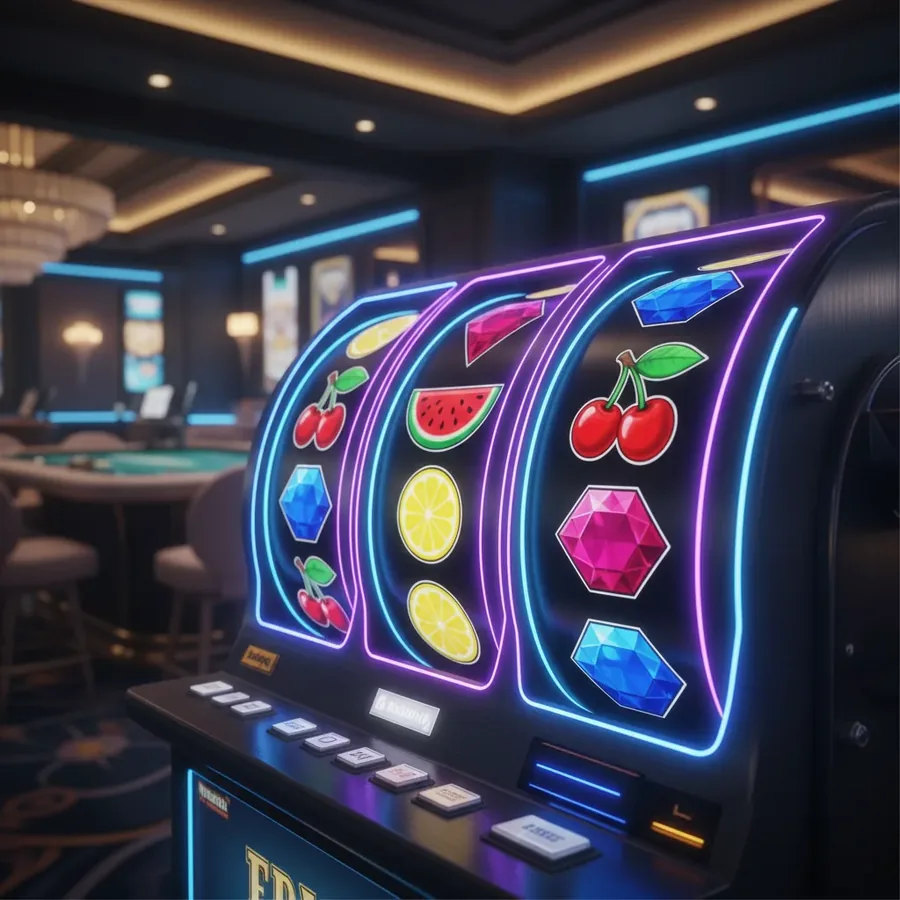
Hold and Win: 3 Respins per Trigger
The trigger in a Hold and Win round grants 3 respins, and each new coin symbol that lands resets the counter back to 3. 9 Coins Grand Gold Edition from Wazdan uses this on a 3x3 grid with 9 positions, so the maximum number of resets across one round is bounded by how many of those 9 positions fill with coins. A round that fills early ends sooner than the counter would suggest.
Buffalo Power: Hold and Win from Playson applies the same 3-respin reset across a 5x3 layout with 20 paylines, which leaves far more positions to fill than the 9 available on the smaller grid. Its max win cap is x1187 at an RTP of 95.04%, against x1500 for 9 Coins Grand Gold Edition at 96.14%. On a €2 stake, that cap difference alone is €626.
The practical effect of the reset rule is that a round can extend well past the initial 3 respins. Each coin that lands during a respin adds one more chance, so a player watching 9 positions gradually fill on the 3x3 grid sees the counter climb back to 3 several times. The round closes when the counter reaches zero with no new coin.
Low Volatility: Small Wins, Shorter Dry Spells
Volatility describes the ratio of hit frequency to win size, and Take Olympus from Betsoft carries low volatility with an RTP of 95.49% and a max win cap of x2328. That RTP is the lowest among the listed low and medium games except Mega Moolah, whose 88.12% is the floor of the entire range. A player staking 100 € on Take Olympus expects roughly 95.49 € returned over hundreds of thousands of spins, with wins arriving more often but smaller.
Fire Joker from Play'n GO sits at medium volatility, an RTP of 96.15% and a max win cap of x800, the lowest cap among all named titles. Buffalo Power: Hold and Win from Playson is also medium volatility at 95.04% RTP with a max win of x1187. Comparing these, Fire Joker's x800 ceiling is 152% of the x1187 cap on Buffalo Power, yet both remain modest against the x111111 top cap on Dead or Alive 2.
For a beginner, the practical effect is shorter dry spells: a 10 € balance on a bet of 0.20 € yields 50 spins, and a low-volatility profile means more of those spins return something. Take Olympus at 95.49% RTP would theoretically return 9.55 € of that 10 € over a long session, while Mega Moolah at 88.12% would return 8.81 €, a difference of 0.74 € per 10 € staked.
Low, Medium and High Volatility Compared
Volatility is the ratio of hit frequency to win size, so a high-volatility slot pays less often but can pay far more per hit. Take Olympus from Betsoft runs at low volatility with an RTP of 95.49% and a max win cap of x2328, meaning the largest possible win is 2,328 times the stake. A 1 € spin therefore caps at 2,328 €, and moderate hits arrive comparatively often.
Mega Moolah from Games Global sits at medium volatility with an RTP of 88.12%, the lowest rate among the slots on this page, and a max win cap of x11250 plus a progressive jackpot starting at 1,000,000 €. That combination means small regular returns during play, while the headline payout depends on the jackpot rather than the base game.
High volatility appears in Big Bamboo from Push Gaming at an RTP of 96.13% and a max win cap of x50000, and in Dead or Alive 2 from NetEnt at 96.82% with x111111. Stakes return less evenly, so 100 € of spins on such a slot can swing far wider than on Take Olympus, where the cap is x2328.
High Volatility: Why 50 Spins Prove Nothing
High volatility raises the ratio of win size to hit frequency, so long runs without a paying spin are normal rather than exceptional. Dead or Alive 2 from NetEnt carries an RTP of 96.82% and a max win cap of x111111, the highest cap in this comparison, but that cap is reached only across a very large number of spins. Fifty spins is a small sample against that horizon.
Big Bamboo from Push Gaming is also high volatility, with an RTP of 96.13% and a max win cap of x50000 on 50 ways across a 6x5 layout. The Dog House from Pragmatic Play pairs an RTP of 96.51% with a cap of x6750 on 20 paylines. The cap spread between Big Bamboo and The Dog House is 43250 multiples of the stake, which shows how differently two high-volatility titles allocate their rare outcomes.
The RTP figure is a theoretical payout rate over hundreds of thousands of spins, so a 50-spin session at 96.82% says nothing about the return on those 50 spins. Staking €1 per spin on Dead or Alive 2 means €50 of total stakes, and the 96.82% long-run average implies an expected return of €48.41 across that horizon, with the outcome of any individual 50-spin window able to sit far from it. A high cap such as x50000 or x111111 is the exception, not the pattern.
Popular slots and their key figures
| Game | Provider | RTP | Volatility | Max Win |
|---|---|---|---|---|
| Gonzo's Quest | NetEnt | 95.97% | medium | x2200 |
| Immortal Romance | Games Global (Microgaming) | 96.86% | high | x12150 |
| Esqueleto Explosivo 2 | Thunderkick | 96.13% | high | x5000 |
| Legend of Cleopatra Megaways | Playson | 95.84% | high | x6584 |
| Chaos Crew | Hacksaw Gaming | 96.30% | high | x10000 |
| Extra Chilli Megaways | Big Time Gaming | 96.82% | high | x20000 |
| Starburst | NetEnt | 96.09% | low | x500 |
| Midas Golden Touch | Thunderkick | 96.10% | high | x10100 |
RTP Between 94% and 97% Across the Catalogue
Temple Tumble Megaways by Relax Gaming returns 96.25% to players over hundreds of thousands of spins, and that theoretical payout rate sits mid-range against the catalogue. Dead or Alive 2 from NetEnt tops the range at 96.82%, while Nitropolis 4 by ELK Studios anchors the bottom at 94.00%. The gap between them is 2.82 percentage points, which on 100 € of stakes means roughly 2.82 € more retained on average at the lower rate.
Big Bass Bonanza from Pragmatic Play pays 96.71%, defined as the share of total stakes returned over the long run, never a forecast for one session. Midas Golden Touch by Thunderkick returns 96.10%, and Gates of Olympus from Pragmatic Play sits at 96.50%. For a beginner staking 100 € across these three titles, the average cost works out to 2.70 € on Gates of Olympus against 3.90 € on Midas Golden Touch.
Volatility separates the figures further: Big Bamboo by Push Gaming pairs 96.13% with high volatility, while Take Olympus from Betsoft combines 95.49% with low volatility. A 96% rate on a high-volatility slot like Big Bass Bonanza can mean long dry spells between hits, so a 100 € bankroll may stretch across many spins or vanish quickly. Beginners often pair a medium-volatility title such as Fire Joker at 96.15% with a modest stake to see more frequent, smaller returns.
Mega Moolah: The Four Progressive Jackpot Tiers
Mega Moolah from Games Global (Microgaming) runs on a 5x3 grid with 25 lines and a base RTP of 88.12%. Volatility is medium, and the standard max win cap stands at x11250, meaning €11,250 returned on a €1 stake. The progressive component adds a prize that is separate from that multiplier.
Four progressive levels sit on top of the base game: Mega, Major, Minor and Mini. The Mega tier starts at 1,000,000 EUR, so a player watching the counter sees a seven-figure sum before any spin. Contribution rules for each tier follow the operator's own scheme, and the 88.12% RTP already reflects the share diverted to the pools.
The x11250 cap applies to the line game, not to the jackpot, so the two payout routes are distinct. Against Dead or Alive 2 at x111111 or Big Bamboo at x50000, the base multiplier of x11250 is modest, and the tiered jackpots are the reason the title is grouped with those high-cap games. At 88.12%, €100 staked costs €11.88 on average.
Tumble: One Bet, Several Wins in a Row
A Tumble mechanic removes winning symbols and lets the remaining ones drop, so a single spin can settle in more than one paying round. Gates of Olympus from Pragmatic Play uses this mechanic on a 6x5 grid with an RTP of 96.50% and a max win cap of x5000. One bet of €1 therefore covers several removal and drop cycles rather than one fixed outcome.
Because each round within the spin can pay, the effective number of paying events per stake rises without any extra deduction. Against a Payline title such as Big Bass Bonanza, which pays 96.71% over a single 5x3, 10-line resolution, the Tumble title spreads its 96.50% across a chain of rounds. A €100 bankroll is not charged twice for the second round inside the same spin.
The chain ends when a drop produces no new win, so the number of rounds varies from spin to spin. Volatility on Gates of Olympus is high, and the x5000 cap applies to the total of the chain, not to each individual round. A beginner watching a single spin should read the running total, not the first round alone.
Following Tumble Wins on a Touchscreen
On a touchscreen, a Tumble spin reports its result in stages: after the first win the symbols vanish, the remaining ones fall, and a new count appears. Gates of Olympus from Pragmatic Play runs this sequence on a 6x5 grid at 96.50% RTP with a max win cap of x5000. Reading each intermediate figure as a separate win overstates what one bet returned.
The counter shown during the chain adds the rounds together. Temple Tumble Megaways from Relax Gaming follows the same idea through its Megaways format, with 46656 Ways, 96.25% RTP and a max win cap of x7767. Because 46656 Ways is a count of possible symbol positions rather than a number of lines, the win per round is computed from matching symbols across those positions.
A practical check is to compare the final figure with the stake: a €1 bet that shows a total of €3.00 has returned x3, whatever the intermediate steps displayed. The x5000 cap on Gates of Olympus and the x7767 cap on Temple Tumble Megaways both apply to that final total. Tapping the screen mid-chain does not alter the sequence.
High Volatility: Rare Hits, Wins Up to x5000
Volatility describes the ratio of hit frequency to win size, so a high-volatility title lands fewer paying spins that are individually larger. Gates of Olympus from Pragmatic Play is rated high volatility with a max win cap of x5000 and an RTP of 96.50%. Rise of Olympus from Play'n GO also carries high volatility and a x5000 cap, though it uses Cluster Pays on a 5x5 grid.
The scale of the caps on high-volatility titles varies widely: Big Bamboo from Push Gaming reaches x50000, Dead or Alive 2 from NetEnt x111111, and Midas Golden Touch from Thunderkick x10100. Against those, the x5000 on Gates of Olympus and Rise of Olympus is the lower end of the high-volatility group. Fire Joker from Play'n GO, by contrast, is medium volatility with a cap of x800.
Rare hits mean longer gaps between paying rounds, so a €100 bankroll on a high-volatility title can be absorbed by a run of non-paying spins before any large win appears. The 96.50% RTP on Gates of Olympus is an average across hundreds of thousands of spins and does not shorten those gaps within one session. Staking €1 per spin, 100 spins consume €100 of turnover regardless of how the outcomes fall.
Before You Spin: Check RTP, Volatility and Max Win
RTP stands for theoretical payout rate, and it is calculated over hundreds of thousands of spins, never over one session. Dead or Alive 2 from NetEnt posts the highest RTP in this selection at 96.82%, while Mega Moolah from Games Global sits at 88.12%. A 100 € stake in Dead or Alive 2 returns 96.82 € on average over the long run, compared with 88.12 € in Mega Moolah.
Volatility describes the ratio of hit frequency to win size; high volatility means fewer hits but larger single wins. Midas Golden Touch by Thunderkick has high volatility and a max win cap of x10100, while Take Olympus by Betsoft runs low volatility with a cap of x2328. A beginner staking 1 € per spin in Midas Golden Touch must expect long dry stretches before a 10100 € ceiling is possible.
Max win cap is the largest possible win as a multiple of the stake. The highest cap in this selection is x111111 on Dead or Alive 2, and the lowest is x800 on Fire Joker from Play'n GO. A 10 € stake in Fire Joker can therefore return at most 8000 €, whereas the same 10 € in Dead or Alive 2 has a theoretical ceiling of 1,111,110 €.
Ways vs Paylines: What Is the Difference?
A payline is a fixed line across the reels, and wins count only when symbols land on that line. Fire Joker has 5 paylines on a 3x3 grid, while Take Olympus has 50 paylines on a 5x4 grid. With 50 lines on Take Olympus, a 0.20 € total stake means 0.004 € per line, so a line win pays less than a full-grid win.
Ways replace fixed lines with a count of possible left-to-right combinations, often from any position. Big Bamboo by Push Gaming uses 50 Ways on a 6x5 grid, while Valley of the Gods from Yggdrasil runs 3125 Ways on a 5x5 grid. The RTP difference is small: 96.13% for Big Bamboo against 96.20% for Valley of the Gods.
The practical difference appears in hit frequency and bet sizing. Temple Tumble Megaways from Relax Gaming runs 46656 Ways with an RTP of 96.25%, compared with 9 paylines on Dead or Alive 2. More ways do not raise RTP; Dead or Alive 2 has 96.82%, higher than Temple Tumble Megaways, but the win distribution changes.
Megaways vs Paylines on Small Screens
On a small display, a payline game like Fire Joker with 5 lines on a 3x3 grid is easier to read than a Megaways layout. Temple Tumble Megaways uses 46656 Ways, and a phone screen shows only a fraction of the possible combinations at once. The player sees the grid but not all win paths simultaneously.
Nitropolis 4 from ELK Studios expands from 4096 Ways up to 262144 Ways on a 6x4-8 grid, which is dense on a small screen. Its RTP is 94.00%, below the 96.25% of Temple Tumble Megaways. A beginner on a phone may prefer a fixed payline slot like Take Olympus with 50 lines and an RTP of 95.49%.
Big Bass Bonanza from Pragmatic Play keeps 10 paylines on a 5x3 grid, which fits a small display cleanly. The max win is x2100 and the RTP is 96.71%, higher than the 95.04% of Buffalo Power: Hold and Win with its 20 lines. Fewer paylines on a small screen reduce visual clutter but do not improve the payout rate.
Megaways vs Cluster Pays: Two Ways to Win
Megaways counts matching symbols on adjacent reels from left to right, and the number of ways changes every spin. Temple Tumble Megaways has 46656 Ways and an RTP of 96.25%, while Nitropolis 4 reaches up to 262144 Ways with an RTP of 94.00%. More ways do not guarantee a higher return.
Cluster Pays ignores left-to-right lines and pays when a block of matching symbols touches. Rise of Olympus from Play'n GO uses Cluster Pays on a 5x5 grid with an RTP of 96.50%, higher than Temple Tumble Megaways' 96.25%. A cluster of five symbols pays as one unit, while Megaways pays per line combination.
Gates of Olympus from Pragmatic Play uses a Tumble mechanic on a 6x5 grid with an RTP of 96.50% and a max win of x5000. Rise of Olympus has the same RTP and cap. A beginner sees the difference: Megaways counts left-to-right, Cluster Pays counts anywhere, and Tumble replaces winning symbols with new ones.
Contact
Live - online chat
Banking









Providers












Tiger Casino 2026